Kojic Acid vs Glutathione: Which Is Better for Dark Spots and Uneven Skin Tone?

If you’ve been researching ingredients for dark spots and uneven skin tone, you’ve probably come across both kojic acid and glutathione. They often appear in the same conversations about discoloration, and sometimes even in the same product. But they aren’t interchangeable ingredients.
The basic difference is fairly simple: kojic acid has a more direct role in topical routines targeting excess pigmentation, while glutathione is an antioxidant that may also influence processes involved in pigmentation.
For visible post-acne marks and localized hyperpigmentation, kojic acid generally makes more sense as a targeted pigmentation ingredient. Glutathione may have a place in skincare, particularly for antioxidant support, but research specifically on topical glutathione remains relatively limited, and results depend heavily on the formulation. A recent systematic review identified only five clinical trials that met its criteria for topical glutathione research. (PubMed Central (PMC))
Neither ingredient should be viewed as a way to change your natural skin color. If you have melanin-rich skin, the goal of a thoughtful routine is to improve the appearance of unwanted discoloration and support a more even-looking complexion while respecting your natural skin tone.
If you’re dealing with recurring discoloration, it also helps to understand why it happens. Start with our Complete Guide to Hyperpigmentation on Melanin-Rich Skin for the bigger picture.

What Is Kojic Acid?
Kojic acid is a compound produced by certain fungi and is also associated with fermentation processes involving ingredients such as rice.
In skincare, it’s best known as an ingredient used in products designed to improve the appearance of hyperpigmentation, including dark spots and post-acne marks.
Its relevance comes down largely to an enzyme called tyrosinase.
Your skin naturally produces melanin, the pigment responsible for skin, hair, and eye color. Tyrosinase participates in the biochemical pathway your skin uses to make melanin. Kojic acid can inhibit tyrosinase activity, which is why it’s incorporated into formulations targeting areas where excess pigmentation is visible.
You’ll find kojic acid in several formats, including:
- Soaps
- Cleansers
- Serums
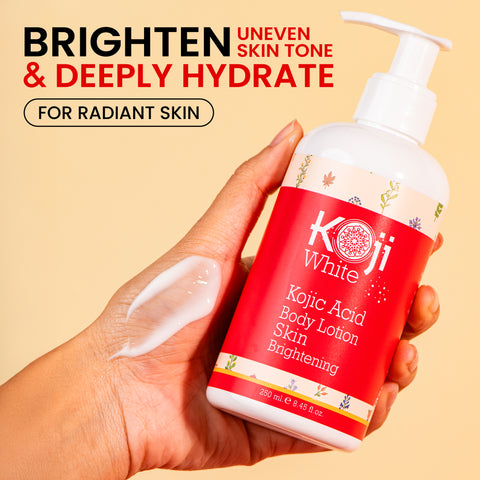
- Creams
The format matters. A cleanser or soap is washed away relatively quickly, while a serum or cream remains on the skin for much longer. That doesn’t automatically make one format better, but it does affect how you should evaluate a product.
Kojic acid can also irritate some people’s skin. Using more, leaving a rinse-off product on longer than directed, or combining several aggressive actives doesn’t necessarily improve results.
For a closer look at the rinse-off format, read Does Kojic Acid Soap Work for Dark Spots and Hyperpigmentation?
What Is Glutathione?
Glutathione is an antioxidant naturally produced by the body. It’s made from three amino acids and plays an important role in cellular antioxidant defenses and redox processes.
In skincare, glutathione appears in products such as creams, lotions, masks, and other cosmetic formulations. Research has investigated its potential antioxidant effects as well as its possible influence on pigmentation.
This is where it’s important to separate skincare science from online hype.
Glutathione is also sold or promoted in oral and injectable forms. Those routes shouldn’t be treated as equivalent to applying a topical cosmetic. Research findings from one route of administration cannot simply be transferred to another.
This article is specifically about glutathione skincare, not instructions for ingesting or injecting glutathione to alter skin color. Reviews of the evidence have raised particular concerns about intravenous use, including insufficient efficacy and safety evidence. (PubMed)
For topical skincare, the picture is more promising but still developing. Small clinical studies have reported changes in measures such as melanin index with certain topical glutathione formulations, but reviews continue to emphasize the small evidence base and need for larger, longer-term trials. (PubMed Central (PMC))
How Does Kojic Acid Work?
Think of tyrosinase as one part of your skin’s pigment-production process.
Kojic acid can interfere with tyrosinase activity. Because of that mechanism, it’s commonly used in products formulated to target the appearance of areas with excess pigmentation.
That makes kojic acid particularly relevant when your concern is something specific, such as a dark mark left behind after a breakout.
Importantly, this doesn’t mean kojic acid “removes” melanin or destroys your natural pigmentation. Melanin is normal, protective, and especially abundant in melanin-rich skin.
The goal is to address visible areas of excess or uneven pigmentation, not eliminate your natural skin color.
Kojic acid is also only one option. Our guide to the Best Ingredients for Hyperpigmentation compares it with other commonly used ingredients and can help put its role in context.
How Does Glutathione Work in Skincare?
Glutathione’s best-established biological identity is as an antioxidant. It helps participate in the body’s defenses against oxidative stress.
Researchers have also proposed several ways glutathione could affect pigmentation pathways, including effects involving tyrosinase and different forms of melanin.
But there’s an important distinction between a proposed biological mechanism and a clinically proven cosmetic result.
Laboratory findings can tell researchers what an ingredient might do under certain conditions. Clinical trials are needed to determine whether a particular topical formulation actually produces a meaningful visible effect on human skin.
Current research suggests topical glutathione has potential, including for pigmentation and antioxidant-related benefits. However, a 2025 systematic review found only a small number of eligible clinical trials and concluded that larger randomized studies with longer follow-up are still needed. (PubMed Central (PMC))
So, “glutathione is involved in pigmentation biology” and “every glutathione skincare product will visibly fade dark spots” are very different claims. The evidence supports being much more cautious about the second.

Kojic Acid vs Glutathione: Key Differences
|
Factor |
Kojic Acid |
Glutathione |
|---|---|---|
|
What it is |
A compound commonly used as a topical pigmentation-targeting ingredient |
An antioxidant naturally present in the body |
|
Primary skincare role |
Targeting the appearance of excess pigmentation |
Antioxidant support; also investigated for pigmentation |
|
How it relates to pigmentation |
Inhibits tyrosinase activity involved in melanin production |
Proposed to influence pigmentation through antioxidant and melanogenesis-related pathways |
|
Dark spots |
Commonly used as a targeted ingredient |
Potential benefit, but topical evidence is more limited |
|
Post-acne marks |
Relevant for targeting visible post-inflammatory pigmentation |
Less established as a specifically targeted post-acne ingredient |
|
Antioxidant benefits |
Not its primary reason for use |
Central to its biological role |
|
Evidence for topical use |
Established use as a pigmentation-targeting topical ingredient |
Promising but limited clinical literature |
|
Common formats |
Soap, cleanser, serum, cream |
Cream, lotion, serum, masks and combination formulas |
|
Potential irritation |
Can cause irritation or sensitivity |
Depends on formulation; long-term topical safety data remain limited |
|
Best suited for |
Routines primarily focused on visible hyperpigmentation |
Formulas where antioxidant support is part of the goal |

Which Is Better for Dark Spots?
If your main concern is visible dark spots or post-acne hyperpigmentation, kojic acid has the more direct role.
Its relationship with tyrosinase makes it particularly relevant to routines designed around excess pigmentation. Glutathione has plausible pigmentation-related mechanisms and some encouraging clinical findings, but the research specifically supporting topical glutathione remains comparatively limited. (PubMed Central (PMC))
That doesn’t mean every kojic acid product will outperform every glutathione product.
Real-world results depend on the complete formulation, concentration, how consistently you use it, your skin’s tolerance, the cause of the discoloration, and how well you protect your skin from UV exposure.
The best ingredient can also be undermined by an overly aggressive routine. If you’re trying to decide where a pigmentation-targeting product fits, see How to Build a Skincare Routine for Dark Spots.

Which Is Better for Uneven or Dull-Looking Skin?
Uneven pigmentation and general dullness aren’t quite the same concern.
If “uneven” means you have clearly defined dark marks or areas of post-inflammatory hyperpigmentation, kojic acid may be the more targeted option.
If your concern is broader and includes supporting skin against oxidative stress, glutathione’s antioxidant properties may be relevant. Some topical studies have reported potential benefits beyond pigmentation, but this research remains limited and formulation-specific. (PubMed Central (PMC))
It’s also worth being precise about the word “dull.”
Naturally melanin-rich skin isn’t dull because it contains more pigment, and healthy skin doesn’t need to become lighter to look radiant. A skincare routine should focus on concerns such as dehydration, rough texture, post-inflammatory marks, or uneven-looking pigmentation rather than trying to change someone’s natural skin color.

Kojic Acid vs Glutathione for Melanin-Rich Skin
For melanin-rich skin, choosing an active is only half the equation. Avoiding unnecessary inflammation matters too.
Inflammation or irritation can contribute to post-inflammatory hyperpigmentation, which means an aggressive attempt to fade a mark can sometimes create another pigmentation problem.
A few principles are useful with either ingredient:
- Introduce new active products gradually.
- Patch test when appropriate.
- Avoid piling multiple strong exfoliating or potentially irritating products into the same routine.
- Keep the skin barrier supported with appropriate moisturizing.
- Use broad-spectrum sunscreen daily.
- Introduce one new active at a time when possible so you can see how your skin responds.
More isn’t automatically better.
Our guide to 3 Common Mistakes People with Melanin-Rich Skin Make When Trying to Fade Dark Spots covers this in more detail.
Can You Use Kojic Acid and Glutathione Together?
Potentially, yes. Kojic acid and glutathione can appear in the same formulation or in different topical products within a routine.
But “can” doesn’t mean “need to.”
Combining ingredients doesn’t automatically produce faster or better results. The finished formulation, concentrations, supporting ingredients, product format, and your skin’s tolerance all matter.
If you’re introducing separate products, add them gradually and follow each product’s directions rather than building the most active-heavy routine possible.
It’s also useful to compare other combinations before choosing. For example, our Kojic Acid vs Vitamin C for Dark Spots and Uneven Skin Tone guide explains how kojic acid compares with another well-known antioxidant ingredient.
Kojic Acid vs Glutathione: Which Should You Choose?
Consider Kojic Acid If:
Kojic acid may make more sense when visible hyperpigmentation is the central reason you’re shopping for a skincare product.
That includes situations where:
- Post-acne dark spots are your main concern.
- You’re looking specifically for an ingredient associated with targeting excess pigmentation.
- Uneven-looking pigmentation is more important to you than general antioxidant support.
Consider Glutathione If:
Topical glutathione may be worth considering when antioxidant support is an important part of what you want from a formula and you’re comfortable with a smaller clinical evidence base for its pigmentation-related benefits.
Some topical formulations have produced encouraging results in small studies, but that shouldn’t be interpreted as proof that all glutathione products perform the same way. (PubMed Central (PMC))
Don’t Choose Based on Ingredient Hype Alone
An ingredient name on the front of a bottle tells you surprisingly little about how well the finished product will work for you.
Look at:
- The complete formulation
- Ingredient concentration when disclosed
- Supporting ingredients
- Whether the format suits your skin
- Irritation potential
- How the product fits with the rest of your routine
- Your sunscreen habits
A well-formulated, tolerable routine you can use consistently is usually more useful than chasing whichever ingredient is currently getting the most attention online.

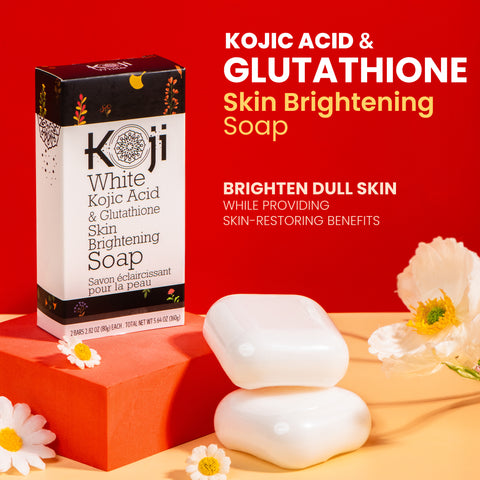
What About Kojic Acid + Glutathione Soap?
You’ll also see searches for glutathione vs kojic acid soap, as well as soaps containing both ingredients.
Why combine them? From a formulation and marketing perspective, they’re associated with different aspects of brighter, more even-looking skin: kojic acid with pigmentation-targeting activity and glutathione with antioxidant and proposed pigmentation-related effects.
But there’s another factor to consider: soap is a rinse-off format.
A soap or cleanser usually remains in contact with your skin for much less time than a leave-on serum or cream. Contact time, concentration, ingredient stability, and the overall formula can therefore affect what you can reasonably expect.
Seeing kojic acid, glutathione, and several other “brightening” ingredients together on one label doesn’t automatically make a soap more effective.
If this is the format you’re considering, read our guide to choosing the Best Soap for Hyperpigmentation.
Don’t Forget Sun Protection
Neither kojic acid nor glutathione replaces sunscreen.
UV exposure can stimulate pigmentation and make existing discoloration more noticeable. That makes daily sun protection an important part of a routine focused on dark spots and uneven-looking tone.
Use a broad-spectrum sunscreen appropriate for your skin and apply it as directed. Other protective measures, including shade and protective clothing, can also help reduce UV exposure.
A targeted ingredient gets much harder to evaluate if ongoing UV exposure is continually contributing to the pigmentation you’re trying to address.
Final Verdict: Kojic Acid or Glutathione?
For targeted hyperpigmentation, kojic acid generally has the more direct and established role in topical skincare. Its effect on tyrosinase makes it particularly relevant when post-acne marks, dark spots, or other areas of visible excess pigmentation are your main concern.
For antioxidant support, glutathione has a clearer biological rationale. Topical glutathione research has also produced promising pigmentation-related findings, but the clinical evidence remains limited enough that broad claims about what every glutathione product can achieve aren’t justified. (PubMed Central (PMC))
So, in the kojic acid vs glutathione for dark spots comparison, kojic acid is usually the more targeted choice. Glutathione is better viewed as an antioxidant ingredient with potentially useful pigmentation-related applications that are still being studied.
Most importantly, don’t judge your routine by one headline ingredient.
Formulation, consistency, skin tolerance, the cause of your discoloration, and daily sun protection can matter as much as the name printed on the front of the product.
The goal isn’t to change the natural color of melanin-rich skin. It’s to support healthy-looking skin and improve the appearance of unwanted dark spots and uneven pigmentation.
Frequently Asked Questions
Is kojic acid better than glutathione for dark spots?
For targeted dark spots and post-inflammatory hyperpigmentation, kojic acid generally has a more direct role because it inhibits tyrosinase, an enzyme involved in melanin production. Topical glutathione has promising research, but its clinical evidence base remains smaller. (PubMed Central (PMC))
What’s the difference between kojic acid and glutathione?
Kojic acid is primarily used in skincare as a pigmentation-targeting ingredient. Glutathione is an antioxidant naturally found in the body that has also been investigated for effects on pigmentation.
Can kojic acid and glutathione be used together?
They can potentially be used within the same topical routine and may also appear together in formulated products. That doesn’t mean combining them is necessarily more effective. Follow product directions and introduce new products gradually.
Is kojic acid good for post-acne dark spots?
Kojic acid is commonly used in skincare designed to improve the appearance of excess pigmentation, including dark marks that remain after acne. Skin tolerance and sun protection are still important.
What does glutathione do in skincare?
Glutathione primarily functions as an antioxidant and is involved in cellular defenses against oxidative stress. Topical formulations have also been studied for pigmentation and other cosmetic skin effects, although larger and longer-term clinical trials are needed. (PubMed Central (PMC))
Is kojic acid or glutathione better for melanin-rich skin?
Neither is universally “better” based on skin tone alone. For targeted hyperpigmentation, kojic acid may be the more directly relevant ingredient. For either option, minimizing irritation is particularly important when your skin is prone to post-inflammatory dark marks.
Does kojic acid and glutathione soap work?
The answer depends on the formulation. Because soap is rinsed off, contact time is shorter than with a leave-on treatment. The presence of both ingredients doesn’t by itself prove that a product will be more effective.
Do I need sunscreen when using products for hyperpigmentation?
Yes. Neither kojic acid nor glutathione replaces sun protection. Broad-spectrum sunscreen is an important part of managing the appearance of pigmentation because UV exposure can contribute to darkening and uneven pigmentation.
Keep Building Your Dark-Spot Routine
Choosing an ingredient is only one part of building an effective routine for discoloration. Explore our guide to the best ingredients for hyperpigmentation to compare kojic acid, vitamin C, tranexamic acid, niacinamide, and other options, and learn where each may fit into your routine.
Read more...
understand hyperpigmentation on melanin-rich skin
what causes dark spots on melanin-rich skin
best ingredients for targeting hyperpigmentation